




Understanding Lipoproteins and Their Impact on Heart Disease Risk
When discussing cholesterol and heart health, the term lipoprotein frequently comes up. Many people know about “good” and “bad” cholesterol, but fewer understand what lipoproteins are and how they affect cardiovascular risk. Monitoring your lipoprotein levels through a Lipoprotein Test or Lipid Profile Test is a crucial step in maintaining heart health.
At Healthcheck360, our preventive heart screening programs focus on early detection, since high cholesterol often shows no symptoms until serious complications arise.
What Are Lipoproteins?
Lipoproteins are particles made of fat (lipid) and protein that transport cholesterol and triglycerides through the bloodstream. Since fats do not dissolve in water, lipoproteins act as carriers, enabling cholesterol and triglycerides to move efficiently in the blood.
These particles deliver cholesterol to cells for essential functions, including hormone production, vitamin D synthesis, and cell membrane maintenance. Problems can occur when certain lipoproteins become too high or imbalanced, which is why cholesterol testing is important.
Types of Lipoproteins and Their Role in Heart Disease
1. Low-Density Lipoprotein (LDL) – “Bad Cholesterol”
LDL is often called “bad cholesterol” because high levels can lead to plaque buildup in arteries (atherosclerosis). When LDL accumulates, arteries narrow, blood flow decreases, and the risk of heart attack or stroke increases.
Regular LDL testing through a lipid profile blood test helps identify elevated levels early, allowing timely intervention.
2. High-Density Lipoprotein (HDL) – “Good Cholesterol”
HDL, or “good cholesterol,” helps remove excess cholesterol from the bloodstream by transporting it to the liver for processing and elimination, a process called reverse cholesterol transport.
Higher HDL levels are associated with a lower risk of heart disease. A cholesterol screening test measures HDL to evaluate how well your body is managing cholesterol.
3. Very-Low-Density Lipoprotein (VLDL)
VLDL mainly carries triglycerides. High triglyceride levels can increase artery hardening, particularly when combined with elevated LDL or low HDL. Testing triglycerides as part of a lipid panel provides a clearer picture of cardiovascular risk.
4. Lipoprotein(a) – An Advanced Risk Marker
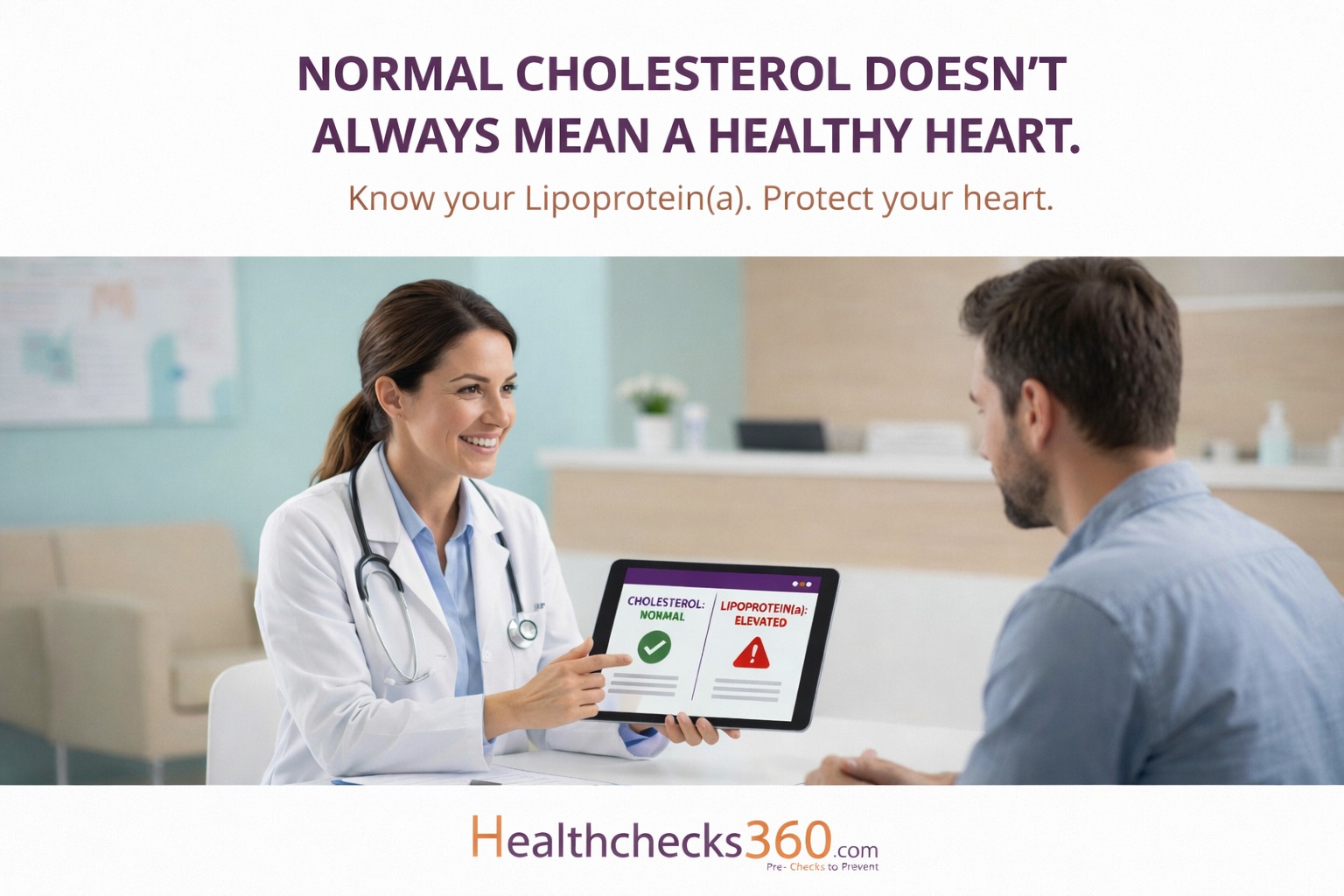
Lipoprotein(a), or Lp(a), is a genetically determined lipoprotein. Unlike LDL, lifestyle changes have minimal effect on Lp(a) levels. Elevated Lp(a) can accelerate plaque formation, increase clotting risk, and raise the likelihood of early heart disease.
Since Lp(a) is not included in standard cholesterol tests, advanced testing is recommended for individuals with a family history of heart disease.
Cardiac Risk Marker Package at Healthcheck360
For those seeking a more comprehensive evaluation, Healthcheck360 offers a Cardiac Risk Marker Package, which tests multiple heart-related biomarkers, including:
Homocysteine
Apolipoprotein A1 (APO-A1)
Apolipoprotein B (APO-B)
Lipoprotein(a) (Lp(a))
Apolipoprotein B/A1 ratio (APO B/APO A1)
High Sensitivity CRP (HsCRP)
This package provides insights into inflammation, cholesterol transport, genetic risk, and overall cardiovascular health. It is especially recommended for:
Individuals with a family history of heart disease
People with diabetes or hypertension
High-stress professionals
Those with borderline cholesterol levels
Corporate employees undergoing preventive screening
Early identification of hidden cardiac risks allows timely lifestyle changes and medical care, reducing the chances of serious complications.
How Lipoproteins Contribute to Heart Disease
Heart disease develops when plaque builds up in arteries supplying the heart:
Excess LDL penetrates artery walls
Inflammation occurs
Plaque forms and thickens
Arteries narrow or rupture
A blood clot may develop, causing a heart attack or stroke
Because high cholesterol often has no symptoms, regular heart health screening is essential.
Who Should Consider a Lipoprotein Test?
A lipoprotein test or cholesterol screening is advisable if you:
Are over 30 years old
Have diabetes or high blood pressure
Have a family history of heart disease
Are overweight or inactive
Smoke
Experience chronic stress
Even apparently healthy individuals may have elevated cholesterol levels. Routine testing provides valuable information and peace of mind.
What Does a Lipid Profile Test Measure?
A standard Lipid Profile Blood Test includes:
Total Cholesterol
HDL Cholesterol
LDL Cholesterol
VLDL Cholesterol
Triglycerides
Cholesterol/HDL Ratio
Non-HDL Cholesterol
Advanced cardiac panels may also include:
Cardiac Risk Markers: Homocysteine, Lp(a), APO-A1, APO-B, APO B/A1 ratio, HsCRP
Additional tests: Hemogram, ECG, Stress ECG (Treadmill Test) or 2D Echo
Healthcheck360 conducts these tests through licensed and accredited laboratories, ensuring accurate results and reliable reporting.
How to Improve Lipoprotein Levels
Effective strategies include:
Following a heart-healthy diet low in saturated and trans fats
Exercising at least 150 minutes per week
Maintaining a healthy weight
Quitting smoking
Managing blood sugar and blood pressure
Taking cholesterol-lowering medication, if prescribed
Knowing your numbers through a cholesterol test is the first step toward improving your heart health.
Take Control with Preventive Screening
Heart disease is a leading cause of death but is largely preventable. Lipoprotein tests, lipid profiles, cardiac risk marker packages, and comprehensive screenings can:
Detect silent cholesterol imbalances
Identify genetic risk factors
Assess inflammatory markers
Prevent artery blockage
Reduce heart attack risk
Support long-term cardiovascular wellness
Healthcheck360’s preventive programs empower individuals to take charge of their heart health confidently.
Lipoproteins are vital for cholesterol transport, but elevated levels—especially LDL and Lp(a)—increase the risk of heart disease. The best prevention is early detection.
Schedule a lipoprotein test, cardiac risk marker package, or cholesterol screening with Healthcheck360 today. Early detection saves lives and supports a healthier future.
Disclaimer
This blog is intended for educational and informational purposes only and should not be considered medical advice. Always consult a qualified healthcare professional for diagnosis, treatment, or personalized medical guidance.